2. Brains of the Operation: How Technology Drives "Smarter" Chains
Technology is the primary disruptor turning traditional, rigid chains into "smart" networks. As a curriculum architect, I categorize these tools by the specific business problems they solve:
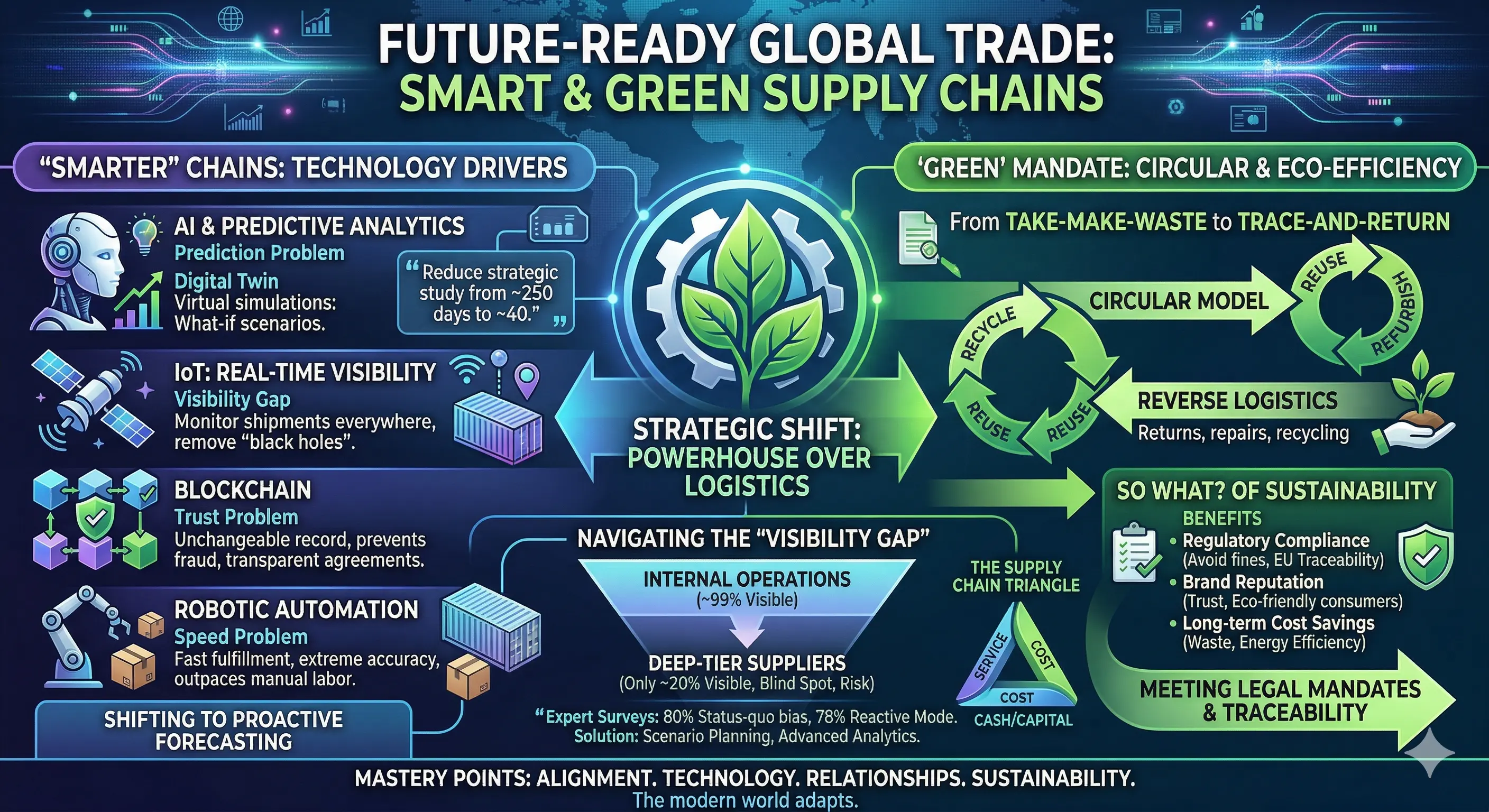
- AI (Artificial Intelligence): Solving the Prediction Problem AI and Machine Learning transform demand forecasting. By analyzing vast amounts of data, AI minimizes waste and ensures products are available precisely when needed, automating the complex evaluation of supplier bids and purchase orders.
- IoT (Internet of Things): Solving the Visibility Gap Through sensors and real-time tracking, IoT monitors shipments at every stage. This removes the "black hole" of transit, allowing managers to monitor conditions and schedules in real time.
- Blockchain: Solving the Trust Problem Blockchain creates an unchangeable, transparent record of transactions. This is essential for verifying supplier agreements and preventing fraud in a globalized network.
- Robotic Automation: Solving the Speed Problem Warehouses equipped with robotics can fulfill orders with a speed and accuracy human labor cannot match, drastically reducing the time between a customer's click and the product's arrival.
The shift from "firefighting" to "forecasting" is most evident in the use of Digital Twins and Predictive Analytics. These tools allow companies to move from reactive modes to proactive simulations.
Digital Twin: A virtual model of the supply chain used for scenario planning. It allows leaders to run "what-if" simulations—such as the impact of a sudden supplier failure or a demand spike—before they happen in the real world.
The impact of these capabilities is quantifiable. According to Siemens data, high-level analytics can reduce the time to execute a strategic network design study from 200–300 days down to just 30–50 days.
While technology provides the visibility required to manage the chain, it also grants us the power to manage our responsibility toward the planet.
3. The Green Mandate: Circular Models and Eco-Efficiency
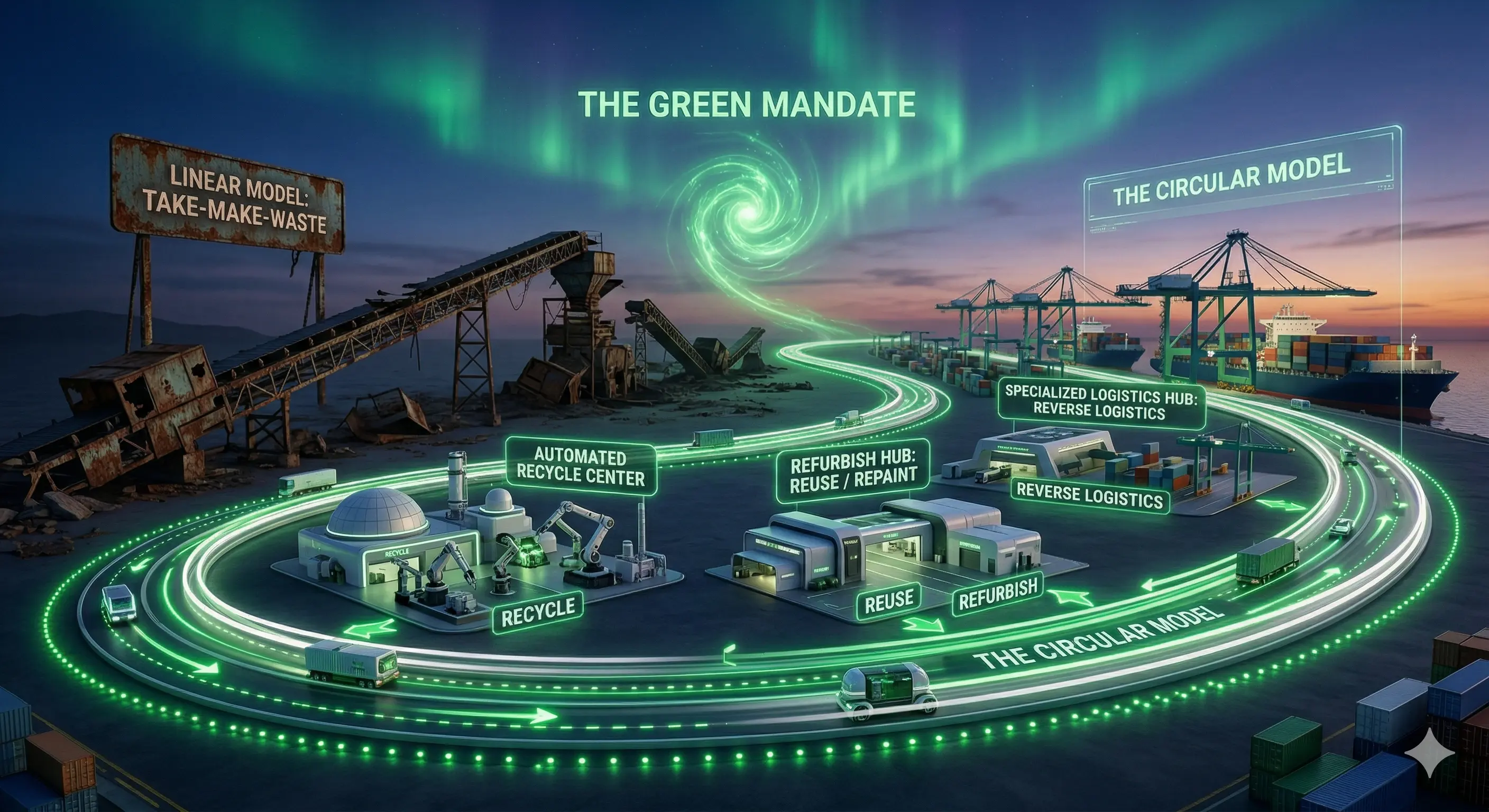
Sustainability has graduated from a corporate social responsibility "extra" to a strategic necessity. This shift is driven by a new era of "Green Supply Chains" and "Circular Models," where the goal is to move from a "take-make-waste" philosophy to a "trace-and-return" system.
New regulations, such as the EU Battery Regulation, are making traceability a legal mandate. This forcing of transparency is driving the adoption of the Circular Supply Chain, which centers on three core actions:
- Recycle: Processing waste materials back into raw resources.
- Reuse: Finding second lives for products to prevent disposal.
- Refurbish: Repairing and updating items to extend their lifecycle.
A critical component of this model is Reverse Logistics—the specialized process of moving goods from the consumer back to the business for returns, repairs, or recycling.
The "So What?" of Sustainability For the learner, the benefits of a green strategy are three-fold:
- Regulatory Compliance: Meeting legal requirements (like the EU's traceability laws) to avoid fines and market exclusion.
- Brand Reputation: Building trust with modern consumers who prioritize eco-friendly brands.
- Long-term Cost Savings: Driving profitability through energy efficiency and the reduction of waste-related expenses.
4. The Learner’s Toolbox: Essential Frameworks for Success
Professional mastery begins with internalizing the frameworks that govern every decision in the industry. Two mental models are essential for any aspiring architect of trade.
The Supply Chain Triangle
This model illustrates the inherent conflict at the heart of management. Every decision involves a trade-off between three points:
- Service: Increasing service levels helps maximize sales but often drives up costs.
- Cost: Reducing operational expenses can threaten the quality of service.
- Cash/Capital: Keeping inventory high improves service but ties up the cash needed for liquidity. The goal is not to maximize one point, but to balance the tension between them.
The 7 R’s of SCM
A strategic supply chain is only successful if it consistently achieves the "7 R's":
- Right Product
- Right Quantity
- Right Condition
- Right Place
- Right Time
- Right Customer
- Right Cost
Even with these tools, professionals face a massive hurdle: the "blind spots" hidden deep within their global networks.
5. The Visibility Challenge: Navigating the "Blind Spots"
The "Visibility Gap" is the most significant threat to modern trade. While internal inventory and warehousing are highly transparent, the deeper levels of the network remain dangerously opaque.
The Tier 2 & 3 Blind Spot
There is a staggering disparity in data availability across the chain:
- Internal Operations: Companies enjoy nearly 99% visibility over their own warehouses.
- Deep-Tier Suppliers: Visibility into Tier 2 and Tier 3 suppliers drops to a mere 20%.
This lack of transparency creates an environment of extreme risk. Expert surveys from Siemens/Axel Regnet highlight why many organizations struggle to bridge this gap:
- 80% of organizations suffer from Status-quo bias: A resistance to changing methods because evaluating complex decisions is labor-intensive.
- 78% of companies remain stuck in "Reactive Mode": They are trapped in short-term firefighting rather than strategic planning.
To overcome these "blind spots," companies must use "what-if" scenario planning and advanced analytics to transform raw data into actionable insights before a disruption occurs.
6. Mastery in Action: Brief Case Studies
Case Study: Amazon
Amazon is the global benchmark for speed and automation.
- Automation: They utilize Kiva robots to fulfill orders at a pace that defines customer expectations.
- AI Integration: They leverage AI-driven logistics and predictive analytics to optimize delivery routes and manage inventory levels proactively.
Case Study: Apple
Apple demonstrates the power of supplier partnerships and Quality Control.
- Exclusivity: Apple maintains long-term, exclusive relationships with high-end suppliers to secure the best components.
Quality Control: By maintaining tight control over their supplier network, they ensure that every product meets rigorous standards, using Just-in-Time (JIT) management to reduce waste without sacrificing excellence.
.svg)