2. Machine Vision: The "Perfect Eyes" of the Assembly Line
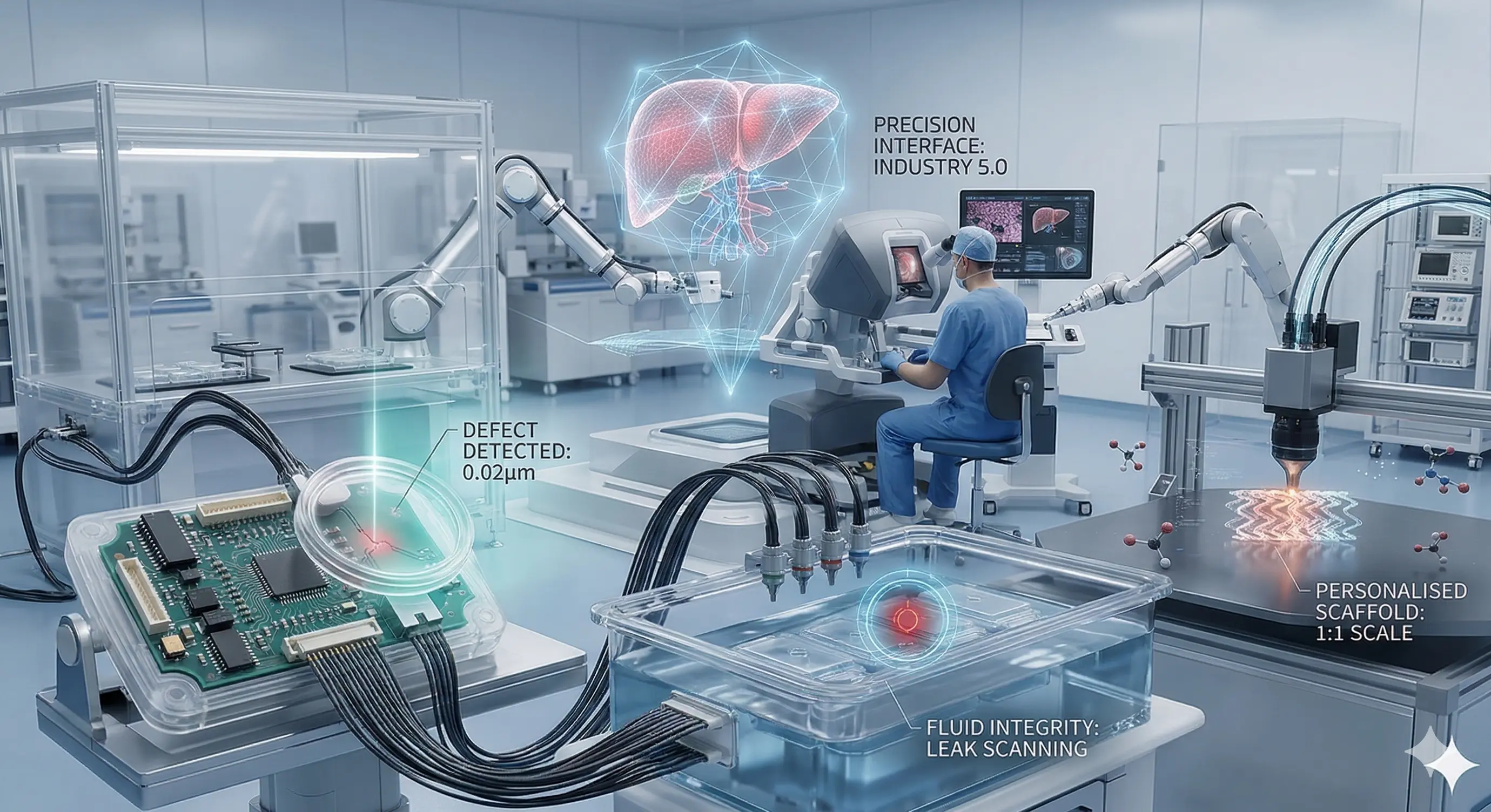
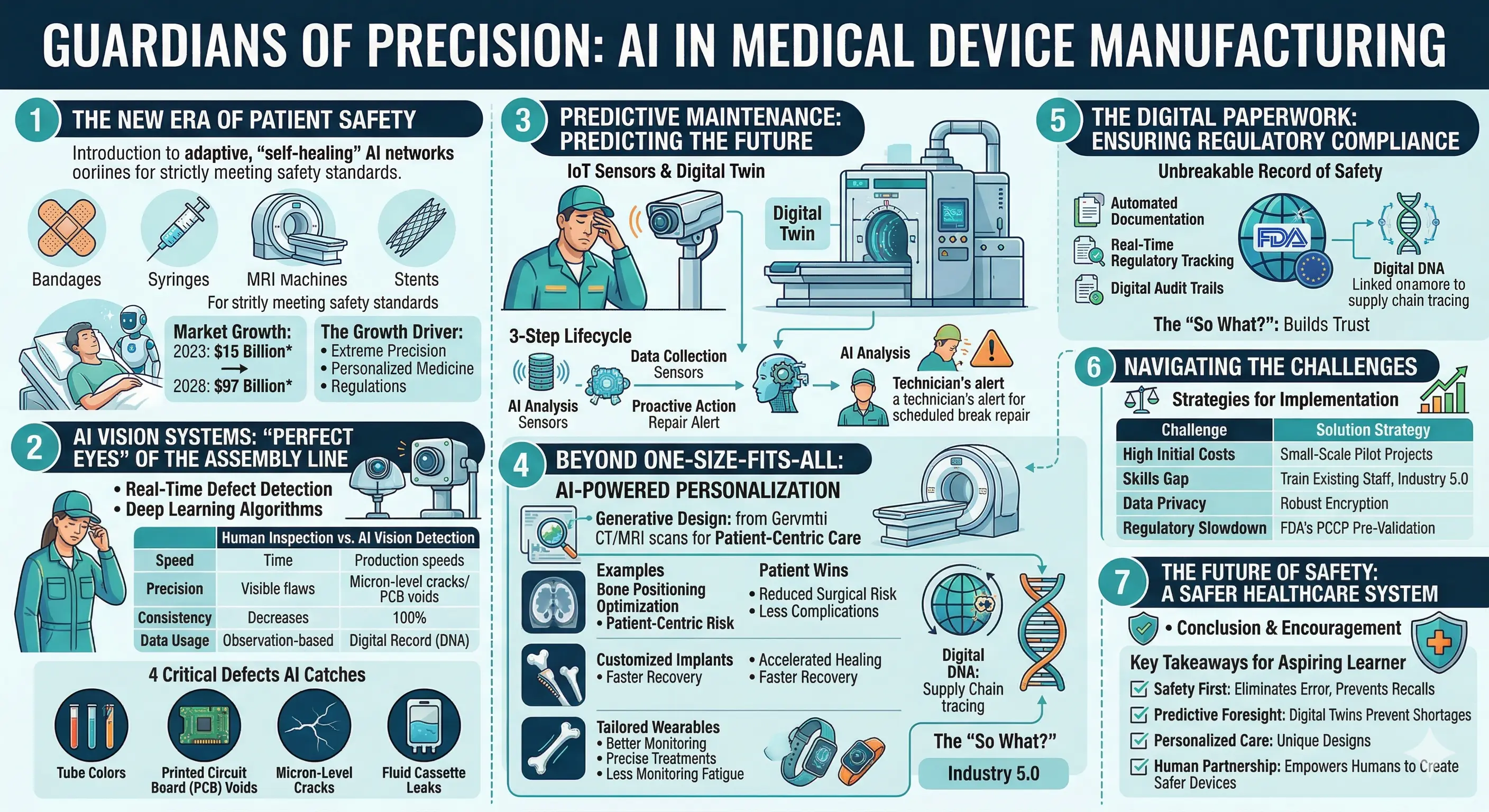
In traditional manufacturing, humans inspect products for flaws. However, humans get tired, and many critical defects are simply too small for the naked eye to see. AI Machine Vision uses deep learning algorithms and high-resolution sensors to perform real-time defect detection with "perfect eyes." These systems can identify "micron-level" flaws—cracks or gaps smaller than a speck of dust—instantly and without interruption.
4 Critical Defects AI Catches
- Tube Colors and Labels: AI ensures that life-saving tubes are correctly color-coded. This prevents "wrong-route" medication errors, where a clinician might mistakenly connect a line to the wrong port.
- Printed Circuit Board (PCB) Voids: Modern devices are increasingly electronic. AI detects voids or foreign materials in the circuitry that could lead to sudden device failure.
- Micron-Level Cracks: The system finds tiny structural flaws in surgical instruments or implants that could cause the device to break or fail inside a patient's body.
- Fluid Cassette Leaks: Detects microscopic leaks in real-time, ensuring that devices relying on fluid delivery are completely reliable during critical procedures.
Moving from sight to foresight, we can see how AI helps manufacturers predict the future of their equipment.
3. Predictive Maintenance: Stopping Problems Before They Start
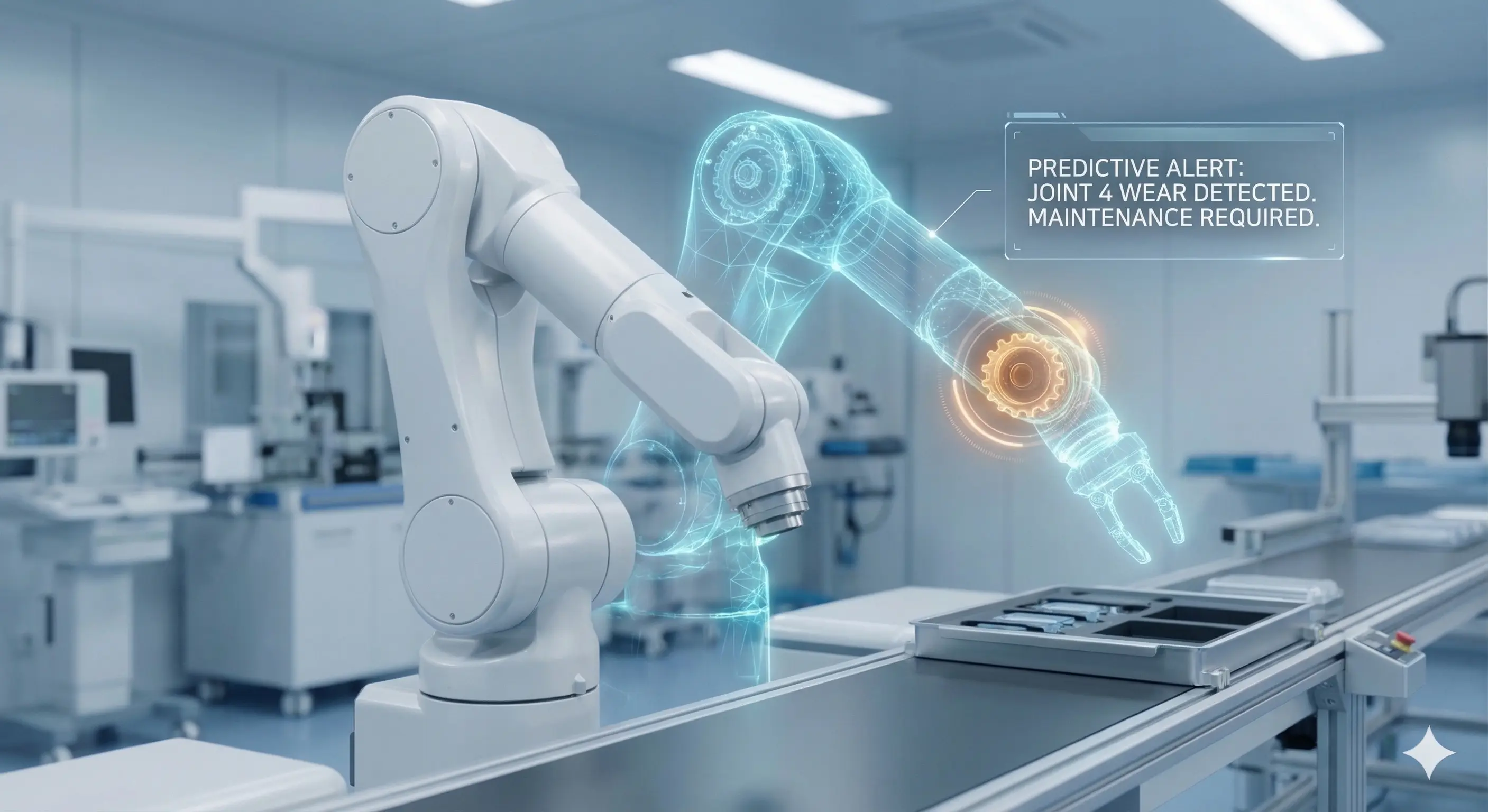
Traditional maintenance is "reactive"—you fix a machine after it breaks. In medical manufacturing, a breakdown can cause a sudden shortage of life-saving supplies like stents or specialized bandages. AI changes this through Predictive Maintenance. By using IoT (Internet of Things) sensors, AI monitors equipment health around the clock, creating what we call a Digital Twin—a virtual replica of the machine that mirrors its real-world performance.
The 3-Step Lifecycle of a Predictive Maintenance Alert
- Data Collection (Sensors): IoT sensors attached to factory machines collect real-time data on vibration, heat, and performance.
- AI Analysis (Pattern Recognition): Machine learning algorithms compare this data to the "healthy" Digital Twin, spotting early warning signs of wear before a part fails.
- Proactive Action (Pre-breakdown Repair): The system sends an alert, allowing technicians to repair the machine during a scheduled break rather than during an emergency.
The 'So What?': This creates self-healing supply chains. By integrating AI with RFID and IoT, manufacturers can automatically trigger corrective actions when a shortage is predicted. For example, GE Healthcare's "OnWatch Predict" system for MRI machines has increased equipment uptime by an average of 4.5 days per year. For a patient, this means the difference between getting a life-saving scan today or waiting a week for a repair.
Beyond keeping machines running, AI is also helping to design devices tailored specifically to your body.
4. Beyond "One-Size-Fits-All": AI-Powered Personalization
For decades, medical implants were "one-size-fits-all." AI is shifting the industry toward patient-centric care by transforming data from CT or MRI scans into custom-made medical solutions through Generative Design.
- Bone Positioning Optimization: AI helps align bone positioning with extreme accuracy during surgery.
- Patient Win: The patient experiences a significant reduction in surgical risk and post-operative complications.
- Customized Implants: AI analyzes a patient’s unique bone structure to design an implant that fits perfectly.
- Patient Win: The patient goes home days earlier because the perfect fit accelerates the body's natural healing process.
- Tailored Wearables: Heart monitors and other sensors are designed using patient data to be more comfortable and accurate.
- Patient Win: Better ongoing monitoring means doctors can detect issues sooner, leading to more precise treatments and less "monitoring fatigue."
This partnership between human creativity and machine intelligence is the heart of Industry 5.0, where technology is used to make healthcare more personalized and human-centered.
While personalization is life-changing, AI also handles the "invisible" work of keeping these devices legal and safe.
5. The Digital Paperwork: Ensuring Regulatory Compliance
Medical devices are among the most regulated products on earth. Organizations like the FDA and the European Commission require a mountain of proof that a device is safe. I like to think of AI-driven compliance as a "Digital DNA Sequence" or a "Black Box Flight Recorder" for every single device produced. It provides an unbreakable record of safety through three vital methods:
- Automated Documentation: AI automatically generates technical files as the device moves through the factory, ensuring no safety step is ever skipped or forgotten.
- Real-time Regulatory Tracking: AI monitors global law changes instantly, ensuring the factory stays up-to-date with new standards from the FDA or EU MDR.
- Digital Audit Trails: AI tracks every raw material from the supplier to the final product. If a single screw is found to be faulty, the manufacturer can use this "Digital DNA" to identify exactly which devices are affected, making safety audits much faster.
The 'So What?': This "boring" paperwork is actually the foundation of healthcare. It is the proof that builds the trust required for a doctor to prescribe a device and for a patient to trust it with their life.
As powerful as AI is, bringing it into a factory requires navigating some honest hurdles.
6. Navigating the Challenges: The Road to Implementation
Adopting AI is not as simple as plugging in a new computer. Manufacturers face core obstacles that require careful strategy.
7. The Future of Safety: Conclusion & Encouragement
AI is more than a tool for factory efficiency; it is a fundamental shift toward a safer healthcare system. By catching microscopic defects, predicting machine failures, and customizing devices to a patient’s unique anatomy, AI acts as a true "Guardian of Precision."
While the technology is complex, its goal is simple: making healthcare safer and more personalized for everyone.
Key Takeaways for the Aspiring Learner
- [ ] Safety First: AI's primary job is to eliminate human error, which is the leading cause of medical device recalls.
- [ ] Predictive Foresight: Through Digital Twins, AI prevents supply shortages before they ever happen.
- [ ] Personalized Care: We are moving away from "generic" parts toward devices designed for your unique bone and vascular structures.
[ ] The Human Partnership: AI doesn't replace humans; it empowers us to create safer, more reliable medical equipment than ever before.
.svg)

.webp)